What Is Schizoaffective Disorder — and How Does Residential Treatment in Phoenix Help Adults Manage It Long-Term?
If your loved one has been diagnosed with schizoaffective disorder — or you’re trying to understand a diagnosis that was just handed to you after a hospitalization — you are probably looking for answers and feeling overwhelmed. Phoenix families navigating this moment often say the same thing: the diagnosis sounds serious, but nobody has fully explained what it means or what comes next. This article is meant to do exactly that, and to help you understand why residential mental health treatment is often one of the most important steps a person with schizoaffective disorder can take toward a more stable life.
What Schizoaffective Disorder Actually Is
Schizoaffective disorder is a psychiatric condition that combines features of two distinct types of illness: a mood disorder (like bipolar disorder or major depression) and a psychotic disorder (like schizophrenia). A person with schizoaffective disorder experiences both at the same time or in close sequence — meaning they may hear voices or hold beliefs that aren’t grounded in reality and also experience extreme highs, deep depressive episodes, or both.
This overlap is exactly what makes schizoaffective disorder so difficult to diagnose and to treat. Clinicians sometimes initially diagnose only one piece of the picture — the mood symptoms or the psychotic symptoms — before the full pattern becomes clear. Families in Glendale, Mesa, Tempe, and across Maricopa County often describe years of bouncing between diagnoses and treatments that only partially worked, because one side of the disorder was being treated while the other went unaddressed.
There are two subtypes:
- Bipolar type: The mood component includes manic or mixed episodes, sometimes alongside depressive episodes.
- Depressive type: The mood component is primarily major depression, without mania.
Both subtypes involve psychotic symptoms — hallucinations, delusions, or disorganized thinking — that can appear even during periods when mood seems stable. That last point is important: unlike bipolar disorder with psychotic features, a person with schizoaffective disorder may experience psychosis independently of their mood state.
Why Outpatient Support Often Isn’t Enough — At Least Not at First
Many adults with schizoaffective disorder spend years trying to manage their condition through outpatient appointments — a psychiatrist visit every few weeks, perhaps a therapist once a week, prescriptions filled at a pharmacy. For some people in stable periods, that approach works reasonably well. But for adults who are actively experiencing psychosis, cycling rapidly between mood states, struggling with medication adherence, or living without reliable housing and support, outpatient care alone often cannot provide what’s needed.
The reality is that schizoaffective disorder is one of the most resource-intensive psychiatric diagnoses to treat well. Medication regimens are complex — often involving mood stabilizers, antipsychotics, and sometimes antidepressants — and finding the right combination takes time, observation, and close clinical monitoring. That level of attention is very difficult to achieve in a one-hour appointment once a month.
Residential treatment addresses this directly. At a licensed Behavioral Health Residential Facility (BHRF) — a specific type of treatment setting licensed by the Arizona Department of Health Services (ADHS) — adults receive 24-hour structured care, daily psychiatric oversight, medication management, and therapeutic programming all under one roof. It is a step above outpatient care and below a hospital inpatient unit, designed for people who need intensive support but whose condition is not immediately life-threatening.
You can read more about what this level of care involves at Bougainvillea Manor’s behavioral health residential treatment page.
What Residential Treatment for Schizoaffective Disorder Looks Like in Practice
A well-structured residential program addresses schizoaffective disorder from multiple angles simultaneously. Here is what that typically includes:
Psychiatric Evaluation and Medication Stabilization
When someone arrives at a residential facility, one of the first priorities is a thorough psychiatric evaluation. For schizoaffective disorder, this means carefully reviewing current medications, assessing which symptoms are most active, and making clinical decisions about adjustments — sometimes significant ones. Because the person is living on-site, staff can observe the effects of medication changes in real time, catching side effects early and adjusting doses in ways that simply aren’t possible in outpatient settings.
Integrated Therapy That Addresses Both Mood and Psychosis
Effective residential treatment for schizoaffective disorder doesn’t treat the psychotic symptoms separately from the mood symptoms — it treats the whole person. Evidence-based approaches like Cognitive Behavioral Therapy (CBT), including a specialized form called CBT for psychosis, help individuals learn to recognize and manage the distorted thinking that accompanies hallucinations and delusions. Trauma-informed care is also critical, because many adults with schizoaffective disorder carry significant trauma histories that complicate both mood and psychotic symptoms.
Medication Management With Continuity at Discharge
One of the most dangerous moments for someone with schizoaffective disorder is the transition out of a treatment setting, when the structure of care suddenly disappears and the responsibility for managing complex medications falls entirely on the individual. A strong residential program builds a discharge plan well before the final day — coordinating with outpatient providers, connecting clients to community mental health resources, and ensuring that prescriptions and follow-up appointments are in place before the person leaves. Medication management that extends through discharge is not a luxury; for schizoaffective disorder, it is essential.
Independent Living Skills That Support Real-World Stability
Symptom stabilization matters enormously, but it’s only part of what recovery from schizoaffective disorder requires. Adults with this diagnosis often need targeted support in managing daily life — understanding their own medication schedules, maintaining hygiene and nutrition during low-motivation periods, navigating public resources, and building the kind of structured routine that supports ongoing stability. Independent Living Skills Training, offered as part of residential programming, directly addresses these areas so that the person leaving treatment has more than a diagnosis and a prescription — they have practical tools.
The Gap Most Facilities Don’t Address: What Happens When Mood and Psychosis Both Flare at Once
This is the section that most other behavioral health provider websites in the Phoenix area gloss over or skip entirely: schizoaffective disorder is uniquely challenging because its two components can escalate each other. A manic episode can intensify psychotic symptoms. A depressive episode can make it harder for someone to recognize or report that their hallucinations are worsening. The interaction between mood dysregulation and active psychosis requires treatment staff who understand both sides — not a program that leans heavily on one treatment approach and treats the other as secondary.
When looking for a residential facility for someone with schizoaffective disorder, families should ask specifically: Does your clinical team have experience managing both psychotic and mood symptoms simultaneously? Do you have on-site psychiatric oversight, not just weekly check-ins? How do you handle a client who decompensates during their residential stay? The answers to those questions tell you a great deal about whether a facility is truly equipped for this diagnosis.
AHCCCS Coverage and How to Access Residential Care
Many adults with schizoaffective disorder in Maricopa County are covered by AHCCCS (Arizona Health Care Cost Containment System), which is Arizona’s Medicaid program. AHCCCS can cover residential mental health treatment at a licensed BHRF when the level of care is clinically appropriate and authorized through the individual’s Regional Behavioral Health Authority (RBHA) — the organization that manages behavioral health benefits for AHCCCS members in a given region.
The authorization process can feel complicated, and many families delay reaching out because they assume navigating insurance will take too long or be too difficult. In practice, facilities experienced in working with AHCCCS can often move through that process efficiently, particularly when a person is in acute need. If your loved one has AHCCCS and needs residential care, don’t let the insurance question be the reason you wait. You can start by verifying insurance coverage directly — it’s a straightforward first step.
Frequently Asked Questions
Is schizoaffective disorder the same as schizophrenia?
No. Schizophrenia involves psychotic symptoms but does not include a significant mood disorder component. Schizoaffective disorder combines psychotic symptoms with a mood disorder — either bipolar type or depressive type. The distinction matters for treatment, because the mood component requires its own targeted interventions.
Can someone with schizoaffective disorder recover and live independently?
Many people with schizoaffective disorder do achieve meaningful stability and, with the right ongoing support, live independently or semi-independently. Recovery is not typically linear, and ongoing medication management and community mental health support usually remain important. Residential treatment helps build the foundation — symptom stabilization, medication clarity, and practical daily living skills — that makes independent living more achievable over time.
How long does residential treatment for schizoaffective disorder usually last?
Length of stay varies depending on the individual’s clinical needs, the complexity of their medication regimen, and their progress in treatment. Many adults benefit from stays of several weeks to a few months. Your treatment team will monitor progress and work with you and your family to plan the right transition, whether that’s to a step-down program, supported housing, or outpatient care.
Does Bougainvillea Manor treat schizoaffective disorder specifically?
Yes. Schizoaffective disorder is one of the diagnoses Bougainvillea Manor Behavioral Health is equipped to treat within its residential program. The clinical team provides integrated care for both the psychotic and mood components of the disorder, with 24-hour support, psychiatric oversight, and individualized treatment planning.
What if my family member also has a substance use problem alongside schizoaffective disorder?
Co-occurring substance use disorders are common among adults with schizoaffective disorder and can significantly complicate both diagnosis and treatment. Dual diagnosis residential care — which treats both conditions at the same time in an integrated way — is the appropriate level of care for this situation. Treating only one condition while ignoring the other rarely leads to lasting stability.
Taking the Next Step
If someone you love has been diagnosed with schizoaffective disorder — or if you’re watching them struggle and suspect something more complex than what’s currently being treated — please don’t wait for the next crisis to ask for help. Residential treatment exists precisely for this moment: when outpatient support isn’t enough and a hospital isn’t the right fit.
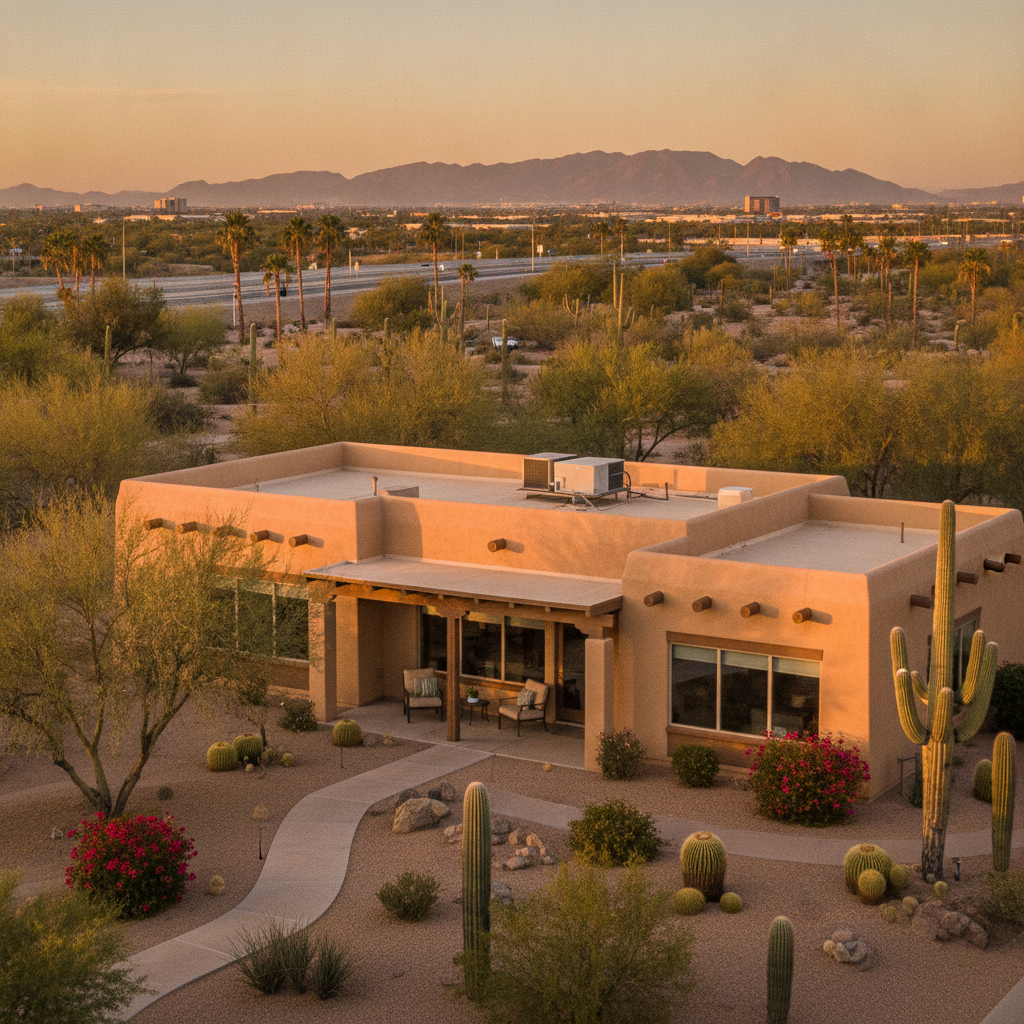
Bougainvillea Manor Behavioral Health is a licensed BHRF located in Phoenix, serving adults across Maricopa County. Our team works with AHCCCS, commercial insurance, RBHAs, hospitals, and families directly to help coordinate admissions as smoothly as possible — even in urgent situations.
Reach out to us today at bgvmanor.com/contact-us or call 866-248-6266. We’re here to answer your questions, walk you through the process, and help you figure out whether residential care is the right next step for your loved one.