What Is Independent Living Skills Training and Why Does It Matter for Adults in South Phoenix and Laveen?
Getting through a mental health crisis is one thing. Learning how to manage daily life afterward — medications, meals, appointments, money, relationships — is another challenge entirely, and it’s one that many adults have never had the support to tackle. For families in South Phoenix, Laveen, and nearby communities like Ahwatukee Foothills, this gap between leaving residential treatment and truly living independently is where a lot of people get stuck. Independent living skills training, offered as a structured component of residential behavioral health care, exists specifically to close that gap — and it may be the part of treatment that makes the biggest difference in whether someone stays well after discharge.
Why Daily Life Skills Get Overlooked in Mental Health Treatment
When a family member is hospitalized for a psychiatric crisis, everyone’s focus is on immediate stabilization — stopping the crisis, adjusting medications, keeping the person safe. That’s exactly what should happen in an emergency. But many psychiatric hospital stays last only a few days, and the discharge plan often lands the person back home or in a setting where the practical demands of daily living quickly become overwhelming again.
Managing a psychiatric condition over the long term requires more than crisis management. It requires knowing how to take medications on schedule, how to recognize early warning signs before a situation escalates, how to cook a meal, keep a routine, get to a doctor’s appointment, and navigate a bus route. For adults who have been in and out of crisis, or who have lived with a serious mental illness for years, these skills may never have been systematically taught — or they may have eroded during a long period of instability.
This is one area where a licensed behavioral health residential facility (BHRF) — a residential treatment setting licensed by the Arizona Department of Health Services (ADHS) and compliant with AHCCCS, Arizona’s Medicaid program, standards — can do something a hospital or a short-term crisis program simply cannot. A BHRF provides 24-hour structured care over weeks, not days, which creates real time and space to build these skills alongside clinical treatment.
What Independent Living Skills Training Actually Looks Like
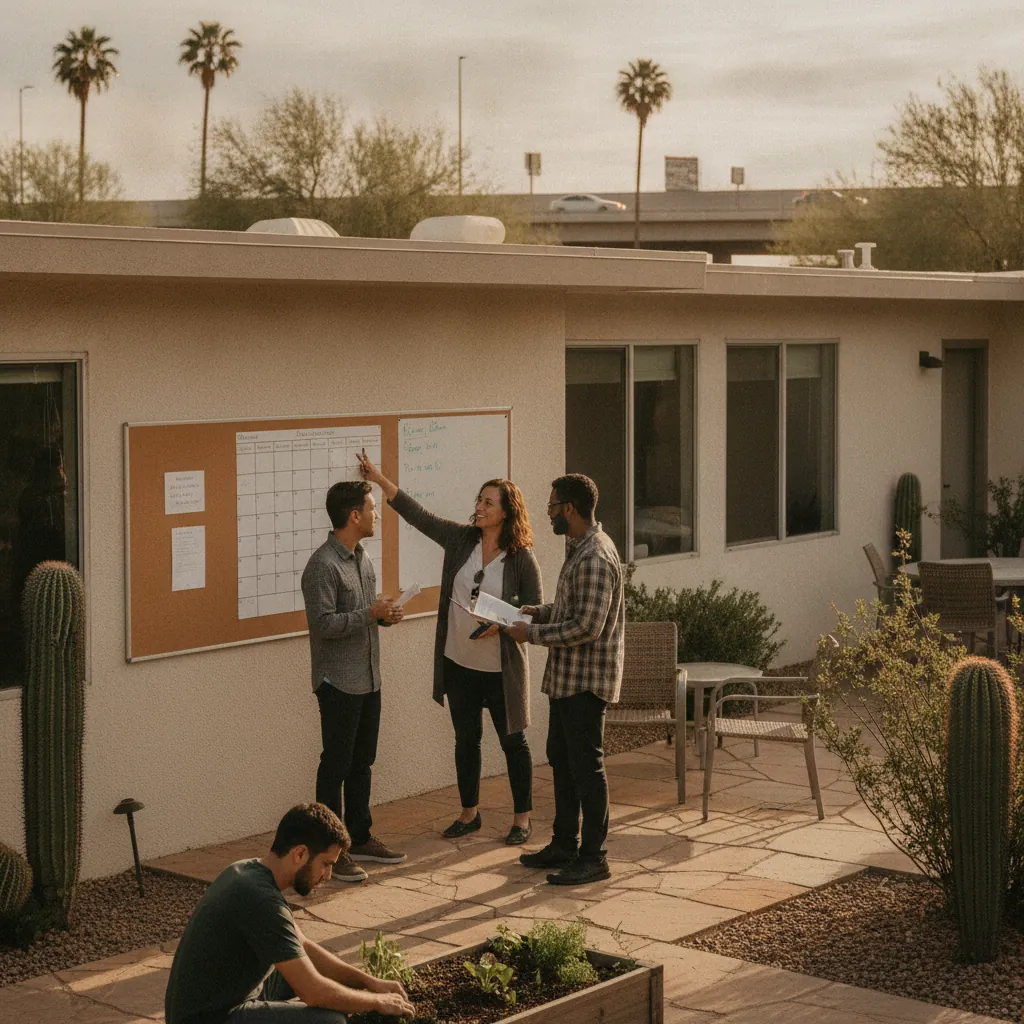
Independent living skills training isn’t a single class or a checklist handed out at discharge. At a quality residential program, it’s woven into the daily structure of treatment. The specific areas covered will vary by individual, but commonly include:
- Medication self-management: Learning what each medication does, how to take it correctly, what side effects to watch for, and how to refill prescriptions without a caregiver doing it for you. This is foundational — one of the most common reasons people return to crisis is stopping medication without guidance.
- Daily routine and hygiene: Building consistent habits around sleep, meals, and self-care that support mental health stability. These seem basic but can be genuinely difficult for someone managing symptoms of depression, schizophrenia, or bipolar disorder.
- Budgeting and financial basics: Understanding how to manage limited income, pay bills, and avoid financial stress that can trigger relapse or crisis.
- Community navigation: Knowing how to use public transportation, access community mental health services, connect with support groups, and find resources through the local Maricopa County behavioral health system.
- Communication and problem-solving: Practicing how to ask for help, communicate with providers, and handle conflict without escalating.
For adults who have experienced co-occurring substance use and mental health challenges — what’s known as a dual diagnosis — these skills are especially important. Navigating recovery from both conditions at once creates real-world demands that abstract clinical concepts alone don’t prepare someone to handle. Integrated dual diagnosis treatment that includes practical skills training addresses the full picture.
Who Benefits Most — and Why South Phoenix and Laveen Families Should Know This
Independent living skills training is valuable for nearly everyone leaving residential treatment, but it tends to be especially important for adults who:
- Have experienced multiple hospitalizations or crises and struggle to maintain stability at home
- Are living with serious mental illnesses such as schizophrenia, schizoaffective disorder, or bipolar I disorder
- Are transitioning from a long period of homelessness, incarceration, or institutional care
- Are young adults who never had the opportunity to develop independent living skills
- Have been dependent on family members for basic daily functioning and whose family is approaching a point of exhaustion
Families in South Phoenix and Laveen — communities that sit along the Baseline Road corridor and that include many AHCCCS-enrolled adults — often reach out for help after months or years of managing a loved one’s crises on their own. By the time they call, they’ve frequently tried outpatient appointments, medication changes, and emergency room visits that didn’t hold. What they haven’t always tried is a longer-term residential stay that teaches their family member how to manage the demands of daily life with less support. That distinction matters.
What Makes a Good Program: A Gap Many Competitors Don’t Address
If you’ve looked at other residential treatment programs in the Phoenix metro, you may have noticed that many describe independent living skills training in very general terms — a line item in a list of services, rarely explained in any depth. That’s a real content gap, and it reflects a real gap in how some programs actually deliver this service.
When you’re evaluating a residential program for a family member, here are questions worth asking specifically about life skills training:
- Is skills training individualized to this person’s specific deficits and goals, or is it a group curriculum everyone goes through the same way?
- How is progress documented, and does the treatment team adjust the plan based on what the person is and isn’t learning?
- Is medication self-management specifically taught — not just managed by staff, but practiced by the resident under supervision before discharge?
- Are community navigation activities practiced in real settings, not just discussed in a classroom?
- Is the discharge plan coordinated with an outpatient provider, case manager, or continuing support team who will reinforce these skills after the person leaves?
A strong program treats independent living skills as a clinical priority, not an afterthought. It connects to discharge planning from day one, so there’s a real transition plan waiting when the time comes — not just a list of phone numbers.
AHCCCS Coverage for Independent Living Skills Training
Many families in Maricopa County are surprised to learn that independent living skills training offered within a licensed BHRF may be covered through AHCCCS, Arizona’s Medicaid program. Coverage is based on medical necessity and is typically authorized through the resident’s Regional Behavioral Health Authority (RBHA) — the managed care organization that coordinates behavioral health benefits under AHCCCS for adults in the county. If you’re not sure whether your family member is enrolled in AHCCCS or what their current authorization status is, a licensed BHRF’s admissions team can help you work through those steps. You can also start by verifying insurance coverage before your first call.
Families from Laveen, Avondale, Goodyear, and the broader West Phoenix and South Phoenix corridor frequently find that their family member is already enrolled in AHCCCS or eligible to enroll — and that full residential treatment including skills training is a covered benefit when clinical criteria are met.
Frequently Asked Questions
Is independent living skills training only for people who have never lived on their own?
No. Many adults who receive this training have lived independently before but lost the capacity to manage daily life during a prolonged mental health crisis. Skills can erode. Treatment helps rebuild them in a structured, supported way.
How long does a residential stay that includes life skills training typically last?
Length of stay varies based on individual clinical need and AHCCCS authorization. Many adults spend several weeks in residential treatment. The focus throughout is on building readiness for a safe, supported transition — not on a fixed number of days.
Can someone receive independent living skills training if they also have a substance use disorder?
Yes. In fact, for adults with co-occurring mental health and substance use disorders — a dual diagnosis — integrated treatment that includes practical skills training is considered best practice. Managing recovery from both conditions requires real-world tools, not just clinical intervention alone.
What happens if someone leaves residential treatment and still isn’t ready to live alone?
A good discharge plan accounts for this possibility. Depending on the individual’s needs and resources, options may include transitional housing, continued case management through an Adult Recovery Team (ART), or step-down to a lower level of outpatient support. The goal is never to discharge someone into a situation they aren’t prepared for.
Does Bougainvillea Manor Behavioral Health accept walk-in admissions?
No. Admissions require an intake assessment and authorization through the appropriate insurance or AHCCCS channel. That said, the process can move quickly — sometimes within a day — when a family calls and explains their situation. Same-day and next-day intakes are possible when a bed is available and clinical criteria are met.
Ready to Talk About What Your Family Member Needs?
If you’re a family member, case manager, or discharge planner trying to figure out whether residential treatment with independent living skills training is the right fit for someone you care about, the best first step is a conversation. You don’t need to have everything figured out before you call. The admissions team at Bougainvillea Manor Behavioral Health can help you understand what to expect, whether AHCCCS or commercial insurance would apply, and how quickly placement could happen. Reach out today — we serve families across South Phoenix, Laveen, and the broader Maricopa County area, and we’re here to help you find a path forward.