What Is Independent Living Skills Training and Why Does It Matter After Residential Mental Health Treatment in Phoenix?
When a loved one is finally stable enough to leave a residential mental health program, it can feel like a moment of relief — and it is. But for many adults, discharge is also the most vulnerable point in their entire recovery journey. The structure, support, and daily rhythms of residential care disappear, and suddenly they are expected to manage medications, keep appointments, handle stress, and navigate daily life largely on their own. In Phoenix and across Maricopa County, this transition gap is one of the most common reasons adults cycle back into crisis shortly after leaving treatment. Independent Living Skills Training — offered as a structured component of care inside a licensed Behavioral Health Residential Facility (BHRF) — is one of the most practical and underappreciated tools for closing that gap before it becomes a crisis.
What Is a BHRF and Why Does the Setting Matter for Life Skills Training?
A Behavioral Health Residential Facility, or BHRF, is a licensed, 24-hour structured treatment setting — not the same as a sober living home or a group home. BHRFs in Arizona are licensed by the Arizona Department of Health Services (ADHS) and must meet specific clinical and operational standards, including AHCCCS (Arizona Health Care Cost Containment System — Arizona’s Medicaid program) compliance requirements under AMPM 320-V. What that means for residents is that treatment inside a BHRF isn’t just a safe place to sleep. It’s an active, supervised therapeutic environment where clinical programming happens daily — and that includes building the practical skills that make independent living possible after discharge.
The difference between a licensed BHRF and an unlicensed living arrangement is significant, and it’s a real source of confusion for families in communities like Maryvale, Laveen, and West Phoenix, where unlicensed homes sometimes market themselves as treatment providers. If Independent Living Skills Training is something you’re counting on as part of a loved one’s recovery, it needs to be built into a licensed clinical program — not informally offered in an unregulated setting.
What Does Independent Living Skills Training Actually Include?
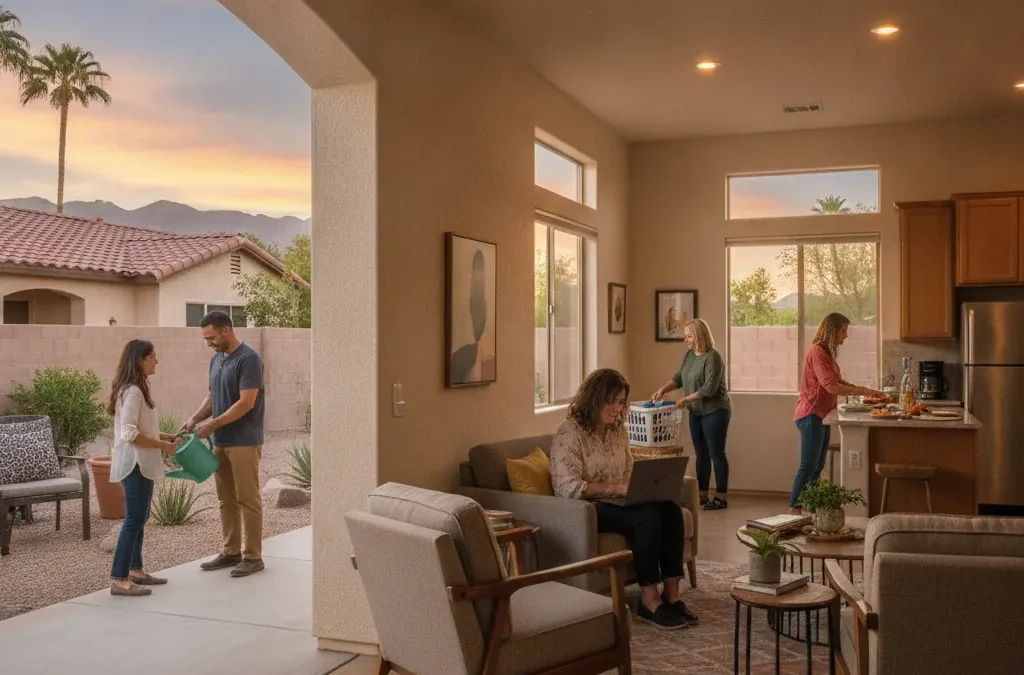
Independent Living Skills Training sounds straightforward, but in practice it covers a surprisingly wide range of daily competencies that people with serious mental illness or co-occurring disorders (a combination of a mental health condition and a substance use disorder — also called dual diagnosis) often haven’t been able to practice or maintain during periods of crisis. Inside a BHRF, this training is individualized, which means it’s built around what that specific person needs — not a one-size-fits-all checklist.
Common areas of focus include:
- Medication self-management: Understanding what each medication does, recognizing side effects, managing refills, and knowing what to do if a dose is missed — without clinical staff there to prompt every step.
- Hygiene and personal care routines: Rebuilding consistent self-care habits that often erode during extended psychiatric episodes.
- Budgeting and financial basics: Managing a fixed income, understanding benefit programs, and avoiding financial decisions that create instability.
- Grocery shopping, meal preparation, and nutrition: Practical skills that directly affect physical health and medication effectiveness.
- Community navigation: Using public transportation in Phoenix, accessing outpatient mental health services, locating food banks, understanding how to reach an ART (Adult Recovery Team — a mobile, community-based support team that helps adults manage behavioral health needs outside of residential settings) when needed.
- Appointment management: Keeping track of outpatient psychiatric appointments, therapy sessions, and AHCCCS-related requirements without dropping the thread.
- Stress management and crisis prevention: Recognizing personal warning signs of relapse or decompensation and knowing what steps to take before a situation escalates.
You can learn more about how this looks inside a structured residential program on the Independent Living Skills Training page.
Why This Is the Recovery Step Most Competitors Don’t Talk About
If you’ve been researching residential mental health treatment options in the Phoenix area, you’ve probably seen a lot of information about crisis stabilization, therapy modalities, and medication management. What’s harder to find is a clear, honest explanation of what happens in the weeks and months after stabilization — and how a well-designed residential program actively prepares someone for that moment.
Many facilities focus their marketing on admission and crisis intervention. Far fewer explain how they help a resident practice making a phone call to reschedule a doctor’s appointment, read a bus schedule, or handle the anxiety of cooking a meal independently for the first time in months. These aren’t small things. For an adult with schizophrenia, bipolar disorder, PTSD, or a personality disorder, these daily tasks can feel genuinely overwhelming without preparation — and a lack of preparation is directly linked to higher rates of rehospitalization and return to crisis.
For families in South Phoenix, Avondale, and communities along the I-10 corridor, where access to outpatient follow-up care can be inconsistent, the quality of in-residential life skills preparation matters even more. If a loved one leaves treatment without those tools in place, the support system that catches them before the next crisis is thinner.
How Medication Management Connects to Independent Living
One of the most common reasons adults return to crisis after residential discharge is a breakdown in medication adherence. This isn’t usually a matter of willingness — it’s a matter of complexity and habit. Psychiatric medications often require consistent timing, food considerations, and regular lab monitoring. In a residential setting, clinical staff manage much of that. The transition to self-management is a skill that has to be deliberately taught.
Inside a licensed BHRF, medication management isn’t just about a psychiatrist prescribing the right combination of medications — though that matters enormously. It’s also about ensuring that by the time a resident leaves, they understand their own regimen, know how to request refills through their outpatient provider, and have a plan for what to do if something changes. The Medication Management program at Bougainvillea Manor is integrated with discharge planning so that residents aren’t learning these skills for the first time on their way out the door.
How AHCCCS Covers Independent Living Skills Training in a BHRF
For families navigating the Maricopa County behavioral health system, cost is often the first concern. The good news is that for AHCCCS members — adults covered through Arizona’s Medicaid program — Independent Living Skills Training delivered inside a licensed BHRF is generally covered as part of the overall residential treatment benefit, subject to medical necessity criteria and prior authorization through the RBHA (Regional Behavioral Health Authority — the organization that manages AHCCCS behavioral health benefits in a given region of Arizona).
If a loved one is being referred by a hospital discharge planner, an ART, or a CFT (Child and Family Team — a coordinated support team that helps families of adults with serious mental illness navigate services), Independent Living Skills Training should be specifically noted in the referral as a treatment need. That framing can support the authorization process and ensure the time spent in residential care includes skill-building, not just stabilization.
For families with commercial insurance or who are self-paying, the coverage and cost structure will vary. The insurance information page at Bougainvillea Manor provides a starting point for understanding what your plan may cover.
Frequently Asked Questions
Is Independent Living Skills Training available for all adults in a residential mental health program in Phoenix?
At a licensed BHRF, Independent Living Skills Training is typically part of the individualized treatment plan for most adults — especially those preparing for transition to a less structured setting. The specific focus areas are tailored to each resident’s situation, history, and goals.
How is this different from what a hospital provides before discharge?
Hospitals focused on acute psychiatric stabilization often have limited time to address practical life skills before discharge. A residential program allows weeks of structured, hands-on practice — not just a discharge packet with phone numbers on it.
My family member has a dual diagnosis. Does that affect Independent Living Skills Training?
Yes, in the sense that the training is adjusted to address both conditions. For adults with co-occurring mental health and substance use disorders, skills around avoiding triggers, managing cravings alongside psychiatric symptoms, and knowing when to reach out for help are woven into the overall program. This integrated approach is essential and should be part of any dual diagnosis treatment program worth recommending.
Can someone in the Maryvale or Laveen area access residential care that includes this type of training?
Yes. Bougainvillea Manor serves adults from across Maricopa County, including South Phoenix, Laveen, Maryvale, and surrounding communities. Proximity to the facility and transportation logistics can be discussed during the admissions process.
What happens if someone isn’t ready to live independently when they leave residential treatment?
That’s an honest question, and it’s one that should be addressed in discharge planning well before the last day of treatment. Options may include transition to a lower level of supervised care, intensive outpatient programs, or continued ART support in the community. A responsible residential program helps residents and families understand what comes next — not just how to get out the door.
Ready to Talk About What Recovery Could Look Like?
If you’re trying to figure out whether residential mental health treatment — including Independent Living Skills Training — is the right step for yourself or someone you love, you don’t have to have everything figured out before you reach out. Bougainvillea Manor Behavioral Health accepts AHCCCS, works with commercial insurance, and has staff available to help you understand what the process looks like from the very first call. Please visit our contact page to get in touch, or call us directly at 866-248-6266. A compassionate, knowledgeable team member will walk you through your options — no pressure, no jargon, just honest guidance about what’s possible.