What Is Independent Living Skills Training and Why Does It Matter for Mental Health Recovery in Tempe?
If your loved one is preparing to leave a residential behavioral health program — or if you are the one getting ready to step down from that level of care — one question often goes unasked: What happens next, practically speaking? Knowing how to manage your medication, cook a meal, keep a schedule, or navigate a bus route might sound ordinary. But for someone recovering from a serious mental health condition, those everyday tasks can feel completely out of reach after weeks or months in crisis. That is exactly what Independent Living Skills Training is designed to address. At Bougainvillea Manor Behavioral Health, this training is woven into residential care from the beginning — not tacked on at the last minute — and it is one of the most important factors in whether someone successfully transitions back to their community, whether that is in Tempe, Mesa, South Phoenix, or anywhere across Maricopa County.
What Independent Living Skills Training Actually Includes
Independent Living Skills Training, often abbreviated as ILST, is a structured, goal-oriented set of supports designed to help adults with serious mental illness or co-occurring disorders build the practical skills they need to live safely and sustainably on their own. It is not job training. It is not therapy. It is the bridge between a stabilized psychiatric state and a functioning daily life.
The skills covered typically include:
- Medication self-management: Understanding what each medication does, how to take it correctly, how to refill prescriptions, and what to do if a dose is missed — because poor medication adherence is one of the leading causes of psychiatric relapse and rehospitalization.
- Personal hygiene and self-care routines: Building consistent routines that support both physical health and mental wellness.
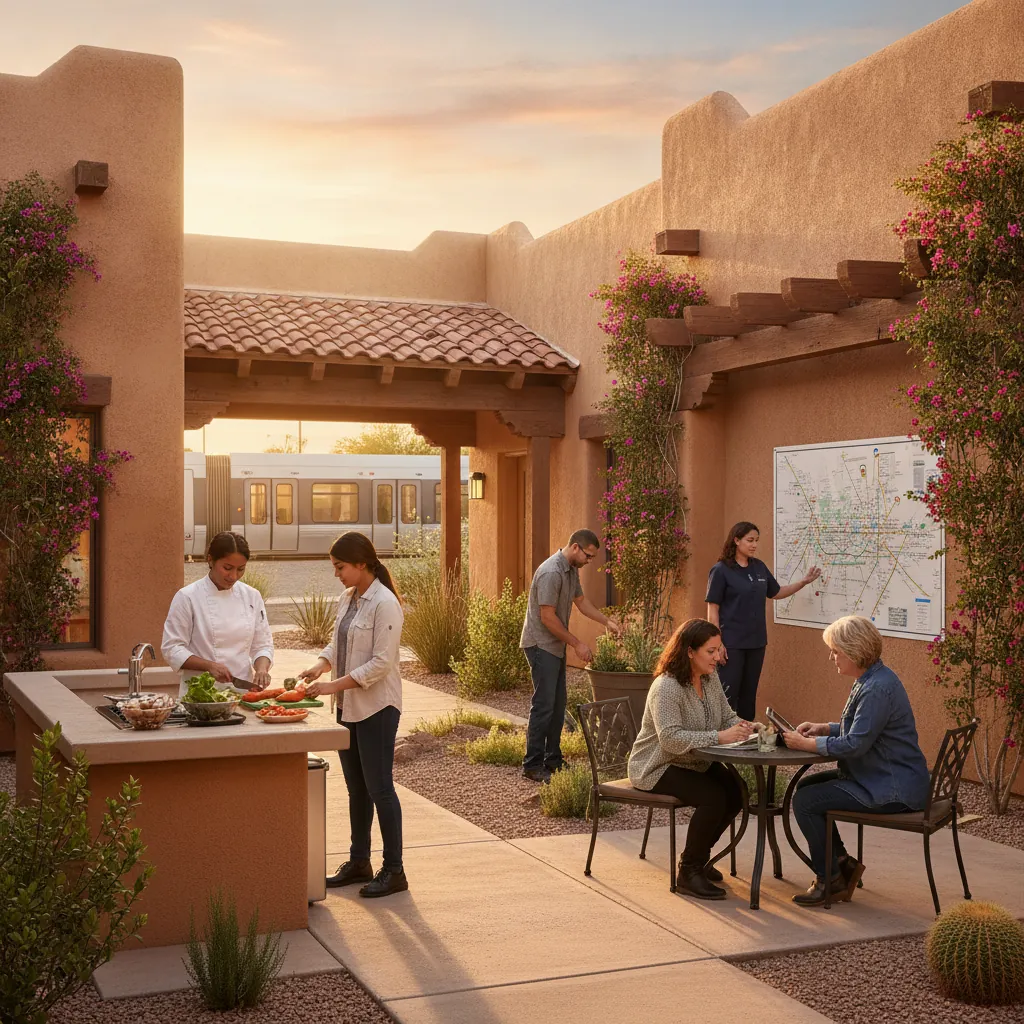
- Household management: Basic cooking, cleaning, grocery shopping, and budgeting — skills that erode quickly when someone has been in crisis for an extended period.
- Community navigation: Learning how to use public transit, access community mental health resources, find a pharmacy, or locate a food bank — especially relevant in areas like South Phoenix and Glendale where transportation access varies widely.
- Appointment-keeping and time management: Scheduling and attending outpatient follow-ups, case management meetings, and ART (Adult Recovery Team) check-ins — a critical piece of the post-discharge plan for anyone connected to the Maricopa County behavioral health system.
- Interpersonal and communication skills: Navigating relationships, asking for help, and communicating needs to providers, family, or landlords.
Why This Training Is Often Missing — and Why That Matters
Here is an important gap that many families do not discover until after discharge: a significant number of residential behavioral health programs in the Phoenix area treat stabilization as the finish line. They focus on psychiatric crisis resolution, medication adjustments, and group therapy — all of which are essential — but they do not invest meaningfully in preparing a person for life after discharge. A resident might be psychiatrically stable when they leave, but completely unprepared to manage a bus transfer to pick up their prescriptions, or to remember to eat before taking their morning medication.
That gap is not a small one. Research consistently shows that practical skill deficits are a primary driver of early relapse and return to emergency psychiatric care. In Maricopa County, where licensed BHRF (Behavioral Health Residential Facility) beds are in high demand relative to available supply, a premature return to crisis-level care puts real strain on both the individual and the system. Prevention — through robust skills training before discharge — is far more effective and far less traumatic than emergency re-stabilization after the fact.
If you are a case manager, discharge planner, or member of a CFT (Child and Family Team) or ART working with an adult transitioning out of hospital or residential care, this is the question to ask any BHRF you are considering for placement: How is independent living skills training integrated into daily programming — and how do you document progress toward discharge goals?
How ILST Fits Into Residential Treatment at a Licensed BHRF
At a licensed BHRF operating under ADHS (Arizona Department of Health Services) standards and compliant with AHCCCS AMPM Policy 320-V, Independent Living Skills Training is a recognized and billable service — not an optional add-on. That means it can be covered through AHCCCS (Arizona Health Care Cost Containment System, Arizona’s Medicaid program) when clinically indicated and properly authorized.
In practice, this means a resident’s individualized treatment plan should include specific, measurable ILST goals from the early days of their stay — not just in the final week before discharge. A well-structured program incorporates skills training into the daily schedule alongside group therapy, individual counseling, and medication management, so that by the time someone is ready to step down, they have actually practiced the skills they will need — not just heard them discussed in a handout.
Skills Training for Dual Diagnosis: An Extra Layer of Complexity
For adults with co-occurring mental health and substance use disorders — sometimes called dual diagnosis — independent living skills training carries additional weight. Early recovery from substance use is itself a full-time cognitive challenge. Add a mood disorder, psychotic disorder, or PTSD into the mix, and tasks that seem simple to others can require enormous mental energy.
Effective dual diagnosis programs do not treat these as separate problems. They integrate skills training into an approach that accounts for both conditions simultaneously — because a person who has learned to manage their bipolar symptoms but has never practiced turning down a drink when stressed will not stay stable for long. The same integrated lens that guides therapy should guide life skills training.
What Families in Tempe, Chandler, and Glendale Should Know Before Discharge
If you have a loved one currently in residential treatment — or if you are exploring placement options — here are the questions worth asking any program about their approach to independent living skills:
- Is ILST part of daily programming, or only addressed in the final days before discharge?
- Is progress on living skills goals documented and shared with outpatient providers?
- Does the program coordinate with the resident’s RBHA (Regional Behavioral Health Authority) case manager on community-based supports post-discharge?
- Are medication self-management skills practiced in a supervised but increasingly independent way during the stay?
- Does the program help connect residents to community resources — food access, transportation, housing support — before they leave?
Discharge without answers to these questions is not a plan. It is a gap.
Frequently Asked Questions
Is Independent Living Skills Training covered by AHCCCS?
Yes. When provided within a licensed BHRF and documented as clinically necessary in an individual’s treatment plan, ILST is a covered service under AHCCCS. If you are unsure whether your loved one’s coverage applies, you can verify insurance coverage before admission.
How long does Independent Living Skills Training take?
There is no fixed timeline. Skills training is individualized — someone who has been living independently before their crisis episode will have different goals than someone who has been cycling through hospitalizations for years. The goal is measurable progress, not a checklist completed in a set number of days.
Can someone in Tempe or Chandler access residential treatment that includes ILST?
Yes. Bougainvillea Manor Behavioral Health, located in Phoenix, serves residents from across Maricopa County — including Tempe, Chandler, Mesa, Glendale, and surrounding communities. Residency in Phoenix is not required for admission.
What is the difference between ILST and sober living?
Sober living homes provide housing in a substance-free environment, typically without clinical programming. Independent Living Skills Training, by contrast, is a structured clinical service provided within a licensed behavioral health setting. The two are not interchangeable. Families in Phoenix should be cautious about unlicensed sober living arrangements that market themselves as treatment — they are not the same and do not carry the same oversight or accountability.
Who refers someone for ILST as part of residential care?
Referrals come from many sources: hospital discharge planners, RBHA case managers, ARTs (Adult Recovery Teams), CFTs (Child and Family Teams), outpatient psychiatric providers, or families themselves. Bougainvillea Manor works with all of these referral sources and can walk your team through the prior-authorization process with AHCCCS.
Taking the Next Step
Recovery is not just about stabilizing a crisis. It is about building the daily foundation that makes stability sustainable. If your loved one — or your client — is approaching discharge from a hospital or residential program, and you are not sure whether independent living skills are part of the plan, now is the right time to ask.
Bougainvillea Manor Behavioral Health provides licensed residential treatment in Phoenix that includes individualized Independent Living Skills Training, medication management, and coordinated discharge planning — for adults across Maricopa County, whether they are coming from Tempe, South Phoenix, Glendale, or anywhere in between. We work directly with AHCCCS, RBHAs, ARTs, and hospital discharge teams to make transitions as smooth as possible.
Reach out today. Our team is ready to answer your questions, walk you through insurance verification, and help you figure out whether residential care at Bougainvillea Manor is the right fit. Contact us here to get started.